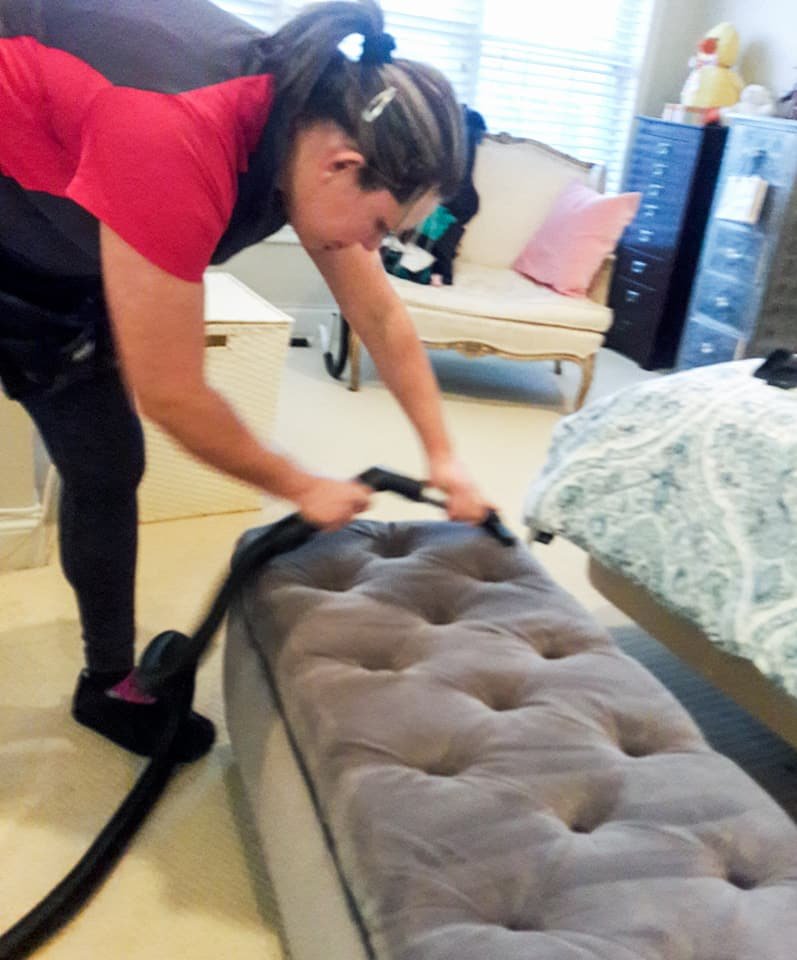

Many Northern Virginia homeowners share the same quiet frustration. You clean your home. You vacuum, wipe surfaces, mop floors, and even light a candle afterward. Yet within a day or two, the house somehow feels messy again. Not cluttered exactly. Just… off. The air feels heavy. Surfaces don’t feel fresh. Dust seems to reappear out of nowhere.
This isn’t laziness. It isn’t poor cleaning habits. And it isn’t your imagination.
What most homeowners don’t realize is that residual dirt and airborne grime play a powerful role in how clean a home actually feels. Even after visible mess is removed, microscopic particles continue to circulate, settle, and rebuild layers of contamination that the eye can’t easily detect.
At Cleaning Fairies VA, we see this issue daily in homes across Northern Virginia. Families are doing their best, yet their homes never quite feel clean for long. This article breaks down the science behind why that happens and explains what truly needs to be addressed to restore long-lasting cleanliness.
The Difference Between “Visibly Clean” and “Environmentally Clean”
Most homeowners define clean by what they can see.
No crumbs on the counter
No stains on the floor
No clutter on surfaces
But environmental cleanliness goes far deeper.
Environmentally clean homes have:
• Low airborne particle counts
• Minimal surface residue at the microscopic level
• Controlled humidity and dust circulation
• Reduced allergen accumulation
A home can look spotless and still be environmentally dirty. This disconnect is what causes that lingering “messy” feeling.
What Is Residual Dirt and Why It Never Fully Goes Away
Residual dirt refers to microscopic particles that remain after standard cleaning. These particles include:
• Fine dust
• Skin cells
• Pet dander
• Pollen
• Textile fibers
• Cooking grease aerosols
• Outdoor pollutants
Even high-quality household vacuums and wipes remove only a portion of this debris. The rest embeds itself into carpets, upholstery, air ducts, baseboards, and porous surfaces.
Once present, residual dirt becomes a foundation layer. New dirt sticks to it faster, making homes feel dirty again almost immediately after cleaning.
The Role of Airborne Grime in Northern Virginia Homes
Northern Virginia’s environment plays a significant role in this issue.
Seasonal pollen levels
High humidity in warmer months
Urban and suburban traffic pollution
Construction dust in growing neighborhoods
All of these contribute to airborne grime.
Airborne grime consists of particles so small they remain suspended in the air for hours. HVAC systems circulate them throughout the home, where they settle on surfaces repeatedly.
This creates a cycle:
Airborne particles circulate
Particles settle
Surfaces are cleaned
Particles resettle within hours
Without addressing the air itself, cleaning becomes temporary.
Why Traditional Cleaning Doesn’t Break the Cycle
Standard cleaning focuses on horizontal surfaces:
Counters
Floors
Tables
But airborne grime settles everywhere, including:
Walls
Ceilings
Furniture backs
Curtains
Vents
Light fixtures
Most routine cleaning ignores these areas entirely.
Additionally, many household vacuums lack true HEPA filtration. Instead of trapping fine particles, they redistribute them into the air, increasing airborne grime rather than removing it.
This is one of the biggest reasons homes feel messy even after effort is applied.
The Psychological Effect of Residual Dirt
Humans subconsciously detect environmental discomfort.
Even when we can’t see dirt, we sense:
• Stale air
• Heaviness
• Visual dullness
• Surface tackiness
These sensations trigger mild stress responses. Over time, homeowners feel:
• Irritable without knowing why
• Dissatisfied with their space
• Constantly behind on cleaning
This phenomenon is especially common in busy Northern Virginia households where work, school, and commuting already create mental overload.
Carpets and Upholstery: The Largest Dirt Reservoirs
Soft surfaces are the biggest contributors to lingering messiness.
Carpets trap:
• Dust
• Allergens
• Moisture
• Oils
Upholstery absorbs:
• Skin cells
• Body oils
• Pet residue
• Airborne particles
Even frequent vacuuming removes only surface debris. Embedded particles remain and continue releasing contaminants into the air every time someone sits, walks, or moves.
This is why a freshly vacuumed home can feel dusty again within hours.
HVAC Systems and the Recirculation Problem
Your HVAC system may be undoing your cleaning efforts.
Air systems pull in:
• Dust
• Dander
• Pollen
• Outdoor pollutants
These particles collect in ducts and vents. Each time the system runs, it redistributes them throughout the home.
Without periodic deep cleaning and proper filtration, HVAC systems act as dirt delivery systems, constantly replenishing airborne grime.
Humidity: The Invisible Accelerator
Northern Virginia’s humidity makes everything worse.
Humidity causes particles to:
• Stick to surfaces
• Clump together
• Become harder to remove
Moist air also encourages:
• Mold growth
• Dust mite activity
• Odor retention
Homes with higher humidity feel dirty faster because grime adheres more easily and becomes embedded deeper into materials.
Why “Quick Cleanups” Make the Problem Worse
Many homeowners respond to recurring messiness with faster, more frequent surface cleanups.
While well-intentioned, this often:
• Spreads particles instead of removing them
• Pushes grime into porous materials
• Masks deeper contamination
This creates cleaning fatigue without real progress.
The Professional Difference: How Cleaning Fairies VA Addresses Residual Dirt
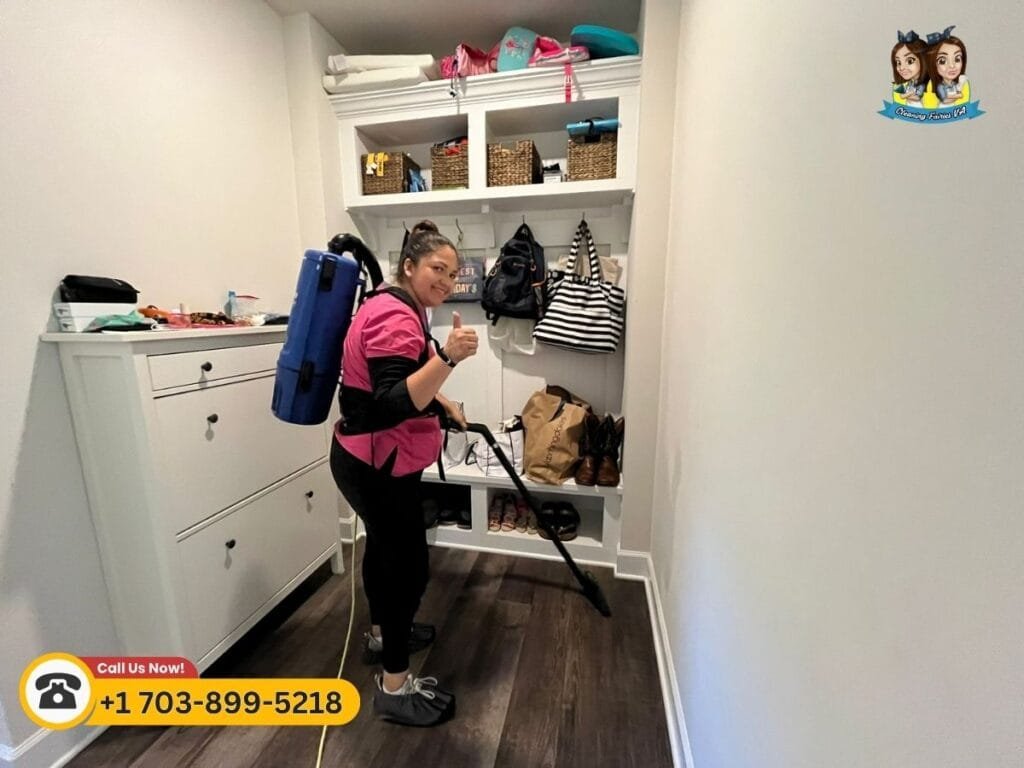
At Cleaning Fairies VA, our approach goes beyond visible mess.
We focus on:
• Air quality
• Particle removal
• Surface restoration
• Long-term cleanliness stability
Our professional cleaning process targets the sources of residual dirt, not just the symptoms.
This includes:
• HEPA-filtered vacuum systems
• Detailed attention to overlooked surfaces
• Proper product selection for particle neutralization
• Strategic cleaning order to prevent recontamination
Why Homes Feel Better After Professional Cleaning
Clients often tell us:
“It feels lighter.”
“The air feels different.”
“It finally stays clean longer.”
This isn’t coincidence.
When residual dirt and airborne grime are reduced:
• Surfaces stay clean longer
• Dust accumulation slows
• Odors diminish
• Stress decreases
A clean home isn’t just about appearance. It’s about environmental balance.
The Long-Term Cost of Ignoring Residual Dirt
When residual grime isn’t addressed, homeowners experience:
• Faster wear on carpets and furniture
• Increased allergy symptoms
• More frequent cleaning cycles
• Higher stress levels
• Decreased enjoyment of the home
Over time, this becomes both a financial and emotional drain.
How Often Homes Truly Need Deep Professional Cleaning
For most Northern Virginia homes:
• Every 2–4 weeks for active households
• Monthly for moderate use
• More frequently with pets or allergies
This doesn’t replace daily tidying. It complements it by resetting the environmental baseline.
Creating a Home That Stays Clean Longer
Long-lasting cleanliness requires:
• Professional deep cleaning
• Proper filtration
• Humidity control
• Consistent maintenance
When these elements work together, homes don’t just look clean. They feel calm, breathable, and restorative.
Why This Problem Is So Common in Northern Virginia
High population density
Seasonal allergens
Busy lifestyles
Heavy HVAC use
All contribute to faster grime buildup.
This is why professional cleaning isn’t a luxury in this region. It’s a practical necessity for maintaining quality of life.
Final Thoughts
If your Northern Virginia home feels messy even after cleaning, the problem isn’t effort. It’s science.
Residual dirt and airborne grime silently rebuild contamination faster than standard cleaning can remove it. Until those invisible layers are addressed, homes will continue to feel unsatisfying no matter how often they’re cleaned. At Cleaning Fairies VA, we help homeowners break this cycle by targeting what others overlook. Because true cleanliness isn’t just what you see. It’s what you breathe, feel, and live with every day.
FAQs
Residual dirt and airborne dust particles resettle quickly, especially in homes with poor air circulation or high foot traffic.
Residual dirt refers to microscopic dust, allergens, and grime left behind or reintroduced into the home through air, fabrics, and HVAC systems.
Surface cleaning helps, but airborne grime often requires professional deep cleaning and proper dust containment methods.
Professional cleaning removes deep-set dust, improves air quality, and reduces the amount of residue that resettles after cleaning.
Most homes benefit from professional cleaning every two to four weeks, depending on pets, family size, and local environmental factors.