If you live in Northern Virginia, you’ve probably had this moment:
You clean your home thoroughly—floors, shelves, bathrooms, everything. It looks great. Feels fresh. But within days, dust is back. The air feels heavy again. Surfaces don’t stay clean the way they used to.
Most homeowners blame the weather, pets, kids, or simply “living in the house.”
But at Cleaning Fairies VA, we’ve learned something surprising from years of professional cleaning across Fairfax and Loudoun County homes:
👉 Your hvac system may be quietly spreading dirt throughout your home every single day.
And the worst part?
You don’t see it happening.
The HVAC System: Comfort Provider or Dirt Distributor?
Your HVAC system is designed to circulate air—keeping your home warm in winter and cool in summer. But air circulation doesn’t discriminate. Along with temperature-controlled air, your system can also move:
- Dust particles
- Pollen
- Pet dander
- Skin cells
- Construction debris
- Mold spores
- Fine outdoor pollution
Once these particles enter the system, they don’t stay in one place. They get redistributed—room to room, floor to floor.
That’s why dirt seems to “come back” faster than it should.
Why This Problem Is Bigger in Northern Virginia Homes
Northern Virginia homes face a unique combination of factors that make HVAC-related dirt spread worse than in many other regions.
1. Seasonal Pollen Is Extreme
Spring in Fairfax and Loudoun County brings heavy pollen levels. Even with windows closed, pollen enters through:
- Doors
- Clothing
- Shoes
- Pets
Once inside, HVAC airflow lifts and spreads it across the home.
2. Homes Are Built to Be Airtight
Modern Northern Virginia homes are energy-efficient and well-sealed. While great for temperature control, this means:
- Less natural air exchange
- More recirculated indoor air
- Dirt stays trapped inside longer
Your HVAC system becomes the main air mover—and dirt mover.
3. Constant System Usage
Unlike milder climates, HVAC systems here run most of the year:
- Cooling in summer
- Heating in winter
- Fan circulation in between
The more the system runs, the more opportunity it has to spread particles.
How Dirt Gets Into Your HVAC System in the First Place
Many homeowners assume dirt enters only through vents. In reality, it enters from multiple sources.
Everyday Entry Points
- Open doors and windows
- Foot traffic
- Pets
- Laundry
- Cooking
- Remodeling or repairs
Once airborne, particles are pulled toward return vents and filters.
The Role of Air Filters (And Why They’re Not Enough)
Air filters help—but they’re not a magic shield.
Common Issues We See:
- Filters not changed frequently enough
- Low-quality filters installed
- Incorrect filter sizes
- Filters overloaded with debris
When filters are dirty:
- Airflow weakens
- Particles bypass filtration
- Dust settles inside ducts
Over time, the system becomes a storage and distribution network for dirt.
Ductwork: The Hidden Highway of Dust
Ducts are rarely inspected by homeowners, but they play a massive role.
Inside ductwork, we often find:
- Fine dust layers
- Construction debris from when the home was built
- Insulation fibers
- Pet hair
- Pollen residue
Every time the system turns on, a small amount of this debris gets released into living spaces.
Why Some Rooms Get Dirtier Faster Than Others
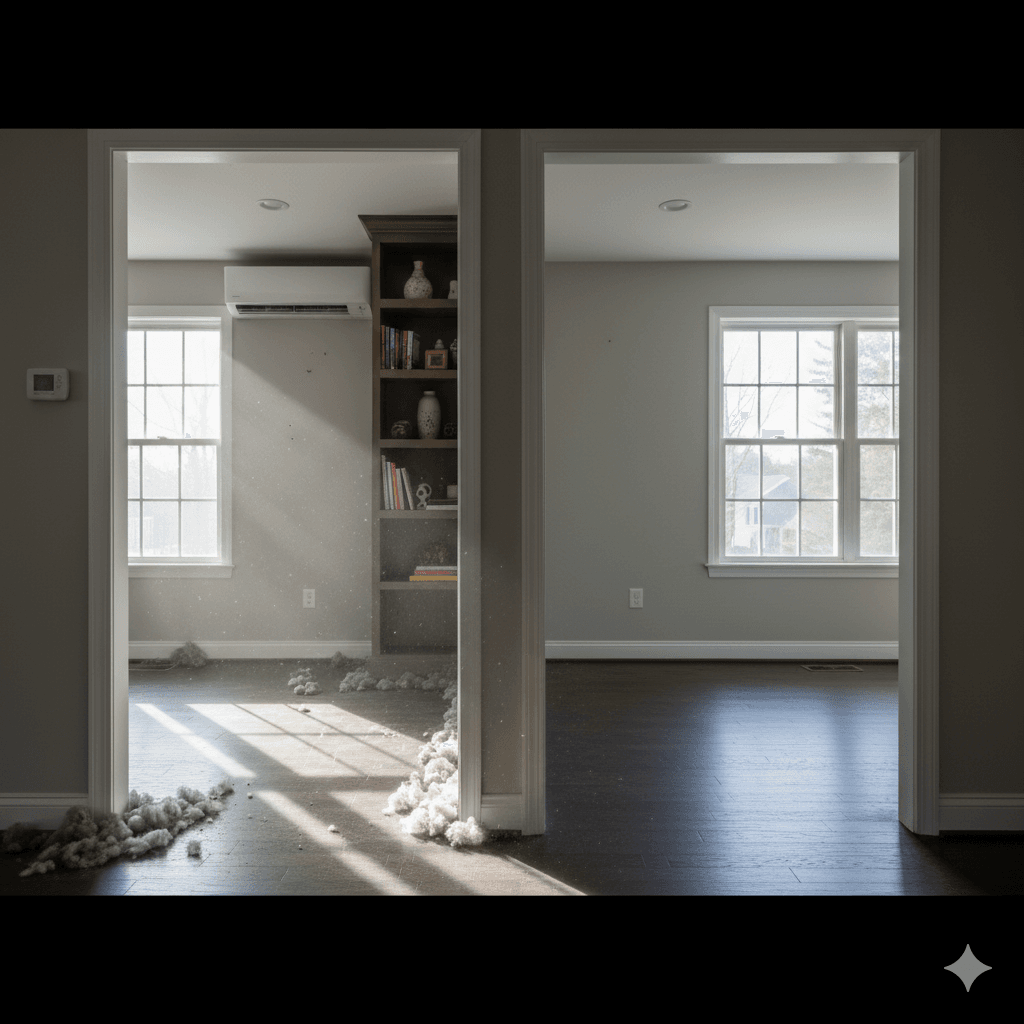
Have you noticed certain rooms collect dust faster?
This is often due to:
- Proximity to return vents
- Airflow pressure differences
- Duct layout design
- Room usage patterns
Bedrooms, bathrooms, and upper floors are especially vulnerable.
Bathroom + HVAC = A Hidden Problem
Bathrooms already struggle with moisture. When HVAC airflow passes through damp spaces:
- Moist air carries particles further
- Residue sticks to surfaces more easily
- Odors linger longer
This explains why bathrooms feel dirty again quickly—even after cleaning.
HVAC Systems and Invisible Air Quality Issues
Not all dirt is visible.
Your HVAC system may circulate:
- Microscopic allergens
- Mold spores from damp ducts
- Bacteria trapped in dust
This can lead to:
- Allergy flare-ups
- Headaches
- Respiratory irritation
- General discomfort indoors
Many homeowners don’t connect these symptoms to cleanliness—but they’re deeply related.
Why DIY Cleaning Can’t Fix This Problem Alone
You can clean surfaces perfectly—but if airborne dirt keeps circulating, the problem persists.
DIY cleaning usually focuses on:
- What you can see
- What you can reach
- What’s already settled
It doesn’t address:
- Airborne particles
- HVAC redistribution
- Dust falling after cleaning
That’s why homeowners feel stuck in a loop.
The “Clean Then Dirty Again” Cycle Explained
Here’s what typically happens:
- Home is cleaned
- HVAC system runs
- Dust redistributes
- Particles settle on clean surfaces
- Home feels dirty again
This cycle repeats unless both air movement and surface cleaning are addressed together.
How Professional Cleaners See HVAC-Related Dirt Differently
At Cleaning Fairies VA, we clean with airflow in mind.
That means:
- Targeting high-fallout areas near vents
- Paying attention to return vent zones
- Cleaning above eye level where dust settles
- Removing fine particles before they resettle
We don’t just clean surfaces—we interrupt the dirt cycle.
Signs Your HVAC System Is Affecting Cleanliness
You may be dealing with HVAC-driven dirt if:
- Dust appears shortly after cleaning
- Shelves collect dust unevenly
- Vents show dark residue
- Allergies worsen indoors
- Air feels stale despite cleaning
These are environmental signals, not cleaning failures.
Why Newer Homes Aren’t Immune
Many Loudoun and Fairfax homeowners are surprised when new homes get dusty quickly.
Why?
- Construction debris remains in ducts
- Drywall dust is extremely fine
- New systems circulate leftover particles
Without deep cleaning, new homes can feel dirtier than expected.
Seasonal Changes Make It Worse
Spring
Pollen overload enters and circulates.
Summer
Humidity causes particles to stick.
Fall
Temperature swings increase airflow cycles.
Winter
Dry air lifts dust more easily.
Your HVAC system adapts—but dirt travels with it.
What Homeowners Can Do (Beyond Cleaning)
While HVAC maintenance matters, cleanliness plays a huge role.
Helpful steps:
- Regular filter changes
- Keeping vents unobstructed
- Reducing dust sources
- Professional deep cleaning
But even with these steps, residue buildup still happens over time.
How Cleaning Fairies VA Helps Break the Cycle
We focus on:
- Removing settled dust before it recirculates
- Cleaning overlooked surfaces near airflow paths
- Resetting rooms so dirt has fewer places to land
- Supporting healthier indoor environments
Our cleaning approach complements HVAC function instead of fighting it.
Long-Term Impact of Ignoring HVAC-Driven Dirt
Ignoring this issue leads to:
- Faster surface wear
- More frequent cleaning
- Reduced indoor comfort
- Higher stress around home maintenance
A cleaner air-surface balance makes homes easier to live in.
The Difference Homeowners Notice After Professional Cleaning
Clients often tell Cleaning Fairies VA:
- “The house stays clean longer.”
- “The air feels lighter.”
- “Dust isn’t coming back as fast.”
- “Bathrooms and bedrooms feel fresher.”
That’s not coincidence—it’s system-level cleaning.
Final Thoughts
Most homeowners think dirt settles naturally. In reality, much of it is moved—quietly and constantly—by your HVAC system.
Once you understand this, cleaning stops feeling frustrating and starts feeling strategic.
A truly clean home isn’t just about wiping surfaces—it’s about breaking the cycle that brings dirt back. At Cleaning Fairies VA, we help Northern Virginia homeowners do exactly that.
FAQs
Yes. HVAC systems circulate airborne dust, pollen, and debris throughout living spaces.
Dust stored in vents and ducts resettles when the HVAC system runs.
Very common due to heavy pollen, sealed homes, and year-round HVAC use.
It helps, but filters alone cannot remove existing duct and surface residue.
It removes settled particles before they recirculate through airflow.