For homeowners in Northern Virginia, the changing seasons are beautiful—but they also bring an invisible intruder: pollen. Trees, flowers, and grasses release billions of tiny particles every year, many of which find their way indoors.
At Cleaning Fairies VA, we regularly encounter homes where pollen is causing:
- Recurring allergy symptoms
- Dust buildup
- Rapid dirt accumulation
- Persistent indoor odors
Even homes that are cleaned weekly are not immune. Understanding how pollen enters, spreads, and settles in your Northern Virginia home is the first step toward keeping it under control.
This article explores the science behind pollen intrusion, the ways it sneaks indoors, its impact on indoor air quality, and the professional solutions that make homes cleaner and healthier.
The Seasonal Pollen Problem in Northern Virginia
Northern Virginia has a unique combination of climate, vegetation, and urban development that makes pollen intrusion a year-round concern.
Key Factors Contributing to Indoor Pollen
- Abundant Trees and Green Spaces
Northern Virginia has dense greenery, including oak, maple, pine, and birch trees, as well as flowering plants that produce pollen. - Seasonal Bloom Cycles
- Spring: Tree pollen dominates
- Summer: Grass pollen rises
- Late Summer/Early Fall: Weed pollen peaks
- Wind Patterns
Even homes with closed windows can experience airborne pollen carried from nearby yards, streets, and parks. - Urban Development and Construction
Soil disruption releases trapped pollen and dust particles, which then travel into homes.
How Pollen Enters Your Home
Pollen can enter through many pathways, often unnoticed.
1. Open Windows and Doors
While ventilation is important, each time a window or door is open, pollen particles enter. These particles are tiny—sometimes microscopic—allowing them to bypass standard window screens.
2. HVAC Systems
Central air systems can draw in pollen through intake vents. Without proper filtration, the system distributes pollen throughout your home.
3. Foot Traffic
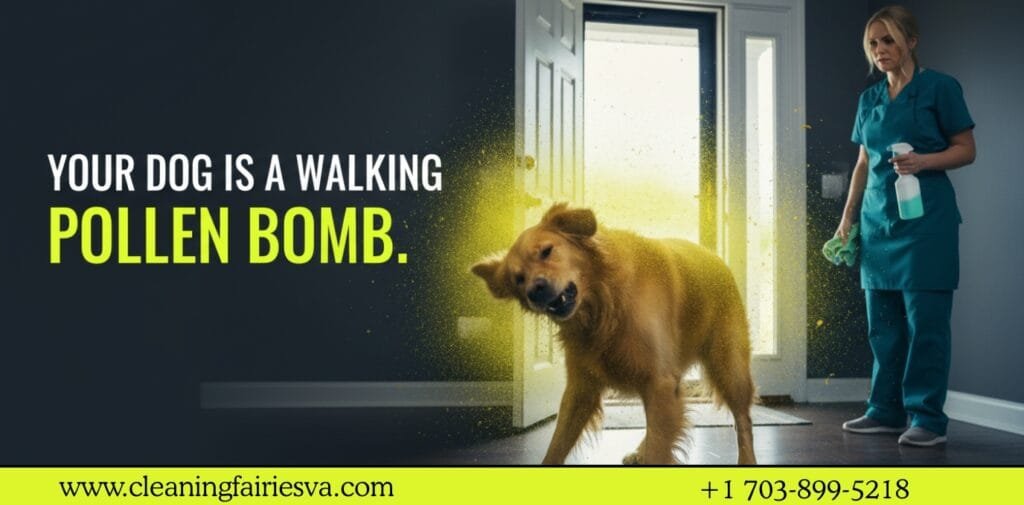
Shoes, clothing, and pet paws carry pollen indoors. Walking across the yard or even sitting near an open window can transport pollen into high-traffic areas.
4. Cracks and Gaps
Tiny gaps around windows, doors, and baseboards allow pollen to seep inside, especially during windy days.
The Science of Pollen Intrusion
Pollen is designed to travel—its goal in nature is reproduction. The structure of pollen grains allows them to:
- Float through the air
- Remain suspended for hours
- Stick to surfaces easily
- Penetrate fabrics and upholstery
Indoor Dust and Pollen Interactions
Pollen often combines with dust and household particles, creating a hybrid allergen that is heavier than pollen alone but still airborne. This combination:
- Settles on floors and furniture
- Gets redistributed through HVAC airflow
- Becomes trapped in rugs, carpets, and curtains
This explains why even clean homes can feel dusty and trigger allergies.
Seasonal Timeline of Pollen in Northern Virginia
| Season | Primary Pollen Type | Typical Symptoms Inside Homes |
| Spring | Tree pollen (oak, birch, maple) | Sneezing, itchy eyes, dust settling on furniture |
| Summer | Grass pollen | Sneezing, clogging of air vents, sticky residue on surfaces |
| Late Summer / Early Fall | Weed pollen (ragweed, sage) | Persistent dust, carpet discoloration, allergy flare-ups |
| Winter | Minimal pollen | Residual dust from previous seasons, buildup in HVAC |
How Pollen Impacts Indoor Cleanliness
Pollen intrusion doesn’t just affect health; it directly influences how clean your home looks and feels.
Surface Contamination
- Pollen settles on counters, tables, and shelves
- Combines with household dust, forming a layer that is harder to clean
- Leaves a subtle, often sticky residue
Air Quality Decline
- Increases airborne allergens
- Can exacerbate respiratory issues
- Reduces the effectiveness of standard cleaning routines
Fabric and Upholstery
- Pollen clings to rugs, carpets, curtains, and upholstered furniture
- Standard vacuuming often fails to remove embedded pollen
- Disturbs indoor air when furniture is moved or used
Common Myths About Pollen and Indoor Cleaning
Myth 1: “If I keep windows closed, pollen won’t enter.”
Reality: Pollen can enter via doors, vents, and even clothing.
Myth 2: “Vacuuming floors removes all pollen.”
Reality: Without HEPA filtration, pollen is often redistributed or remains trapped in fabrics.
Myth 3: “Dusting with a dry cloth is sufficient.”
Reality: Dry dusting spreads pollen into the air, allowing it to resettle elsewhere.
How Professional Cleaning Handles Seasonal Pollen
At Cleaning Fairies VA, we approach seasonal pollen strategically, not superficially.
Step 1: HVAC and Vent Cleaning
- Remove pollen trapped in intake vents
- Clean surrounding wall areas and baseboards
- Ensure proper filtration to reduce redistribution
Step 2: Fabric Attention
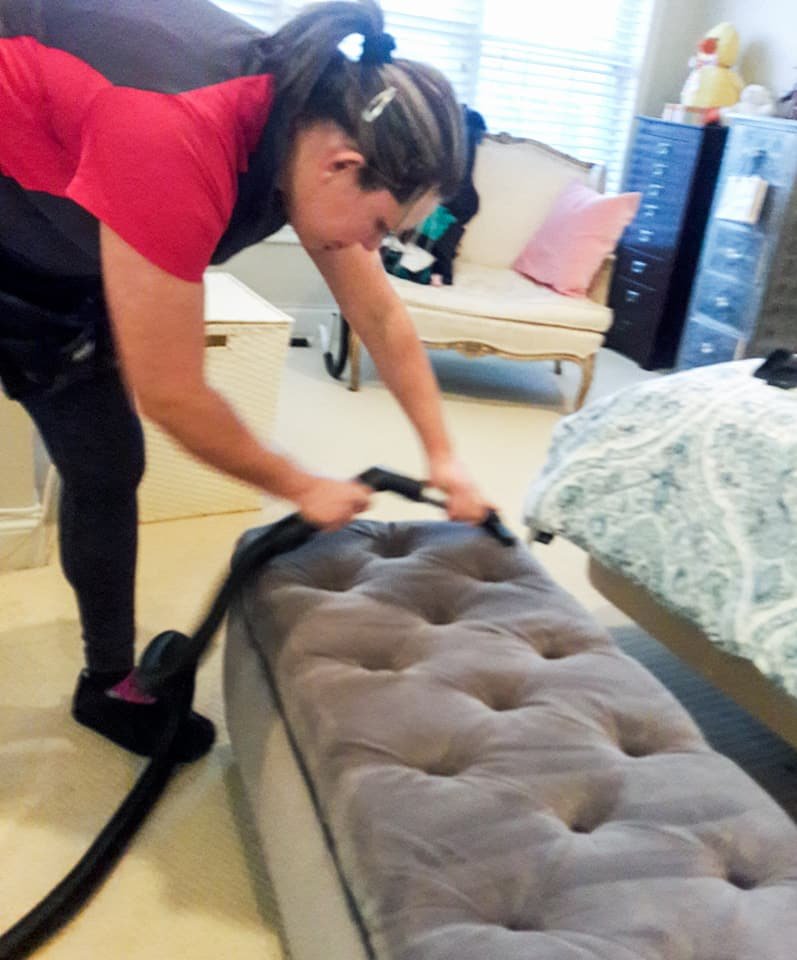
- Use HEPA vacuuming on carpets, rugs, and upholstery
- Damp cleaning for curtains and fabric surfaces
- Target hidden pollen reservoirs in furniture crevices
Step 3: Top-to-Bottom Cleaning
- Dusting ceilings, fans, and shelves first
- Working downward to prevent resettling
- Incorporating microfibre and damp cloth techniques
Step 4: Airflow Awareness
- Professionals understand how airflow spreads pollen indoors
- Cleaning sequences are designed to minimize movement and redistribution
DIY Tips to Reduce Indoor Pollen
Even without professional cleaning, homeowners can take steps to limit pollen intrusion:
- Keep windows closed during peak pollen hours (early morning)
- Implement shoes-off policies indoors
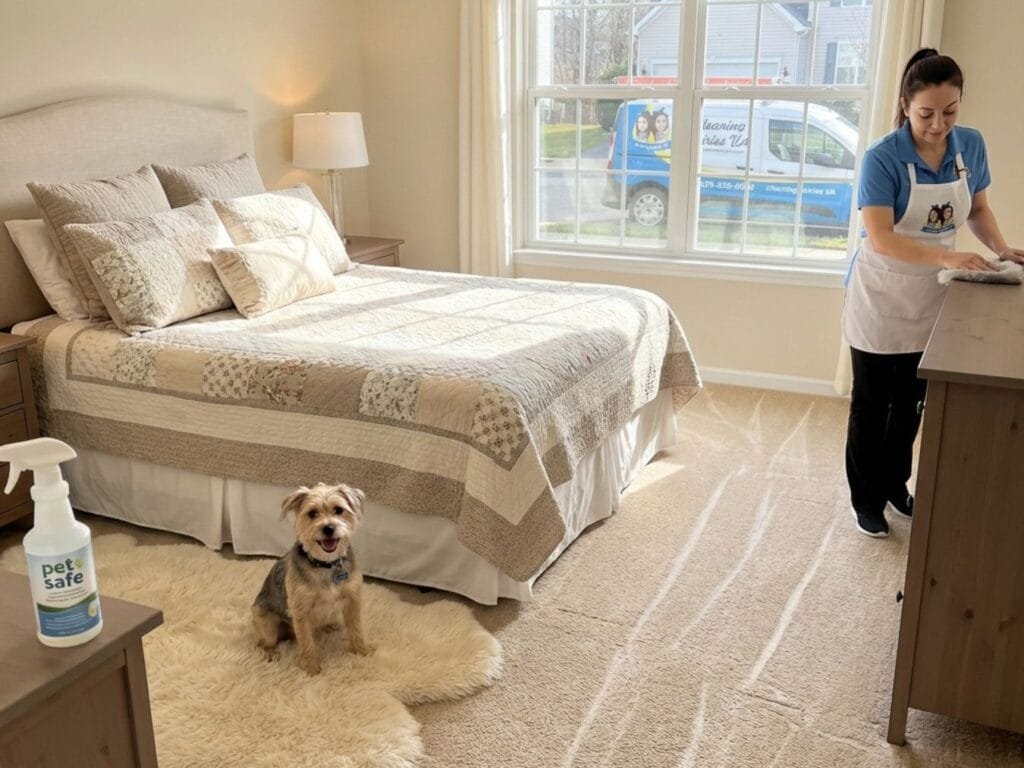
- Wash pet paws after outdoor exposure
- Clean entryway mats regularly
- Wipe surfaces with damp microfiber cloths
These steps reduce pollen levels but cannot replace the thorough cleaning offered by professionals.
Health Implications of Indoor Pollen
Pollen exposure indoors can cause:
- Sneezing, nasal congestion, and itchy eyes
- Fatigue and headaches
- Worsened asthma symptoms
- Increased allergy flare-ups in children and pets
Professionally cleaning pollen from indoor surfaces and fabrics reduces these health risks significantly.
Why Northern Virginia Homes Are Especially Vulnerable
- Close proximity to highways and main roads
- Rapid residential and commercial development
- Abundance of flowering trees and grasses
- Homes with pets and children
Combined, these factors make pollen control a year-round concern.
Case Study: Northern Virginia Home
A family in Chantilly VA noticed persistent allergy symptoms despite weekly cleaning.
Upon inspection by Cleaning Fairies VA:
- HVAC vents had accumulated pollen from outdoor air
- Carpets and upholstery contained embedded pollen
- Dust combined with pollen was settling on surfaces repeatedly
After a comprehensive cleaning:
- Airborne pollen decreased dramatically
- Surfaces stayed clean for weeks
- Allergy symptoms reduced significantly
This demonstrates the importance of targeted, professional cleaning in combating seasonal pollen intrusion.
Long-Term Benefits of Professional Pollen Management
- Improved Indoor Air Quality – Reduces allergens and improves breathing.
- Extended Cleanliness – Surfaces remain cleaner longer.
- Reduced Allergy Symptoms – Healthier environment for families.
- Protects Fabrics and Furniture – Prevents discoloration and dust buildup.
- Peace of Mind – A home that truly feels fresh and clean.
Final Thoughts
Seasonal pollen is an unavoidable part of life in Northern Virginia—but it doesn’t have to control your home’s cleanliness.
The key is understanding how pollen enters, moves, and settles. With a combination of strategic professional cleaning from Cleaning Fairies VA and smart daily practices, your home can remain clean, fresh, and healthy throughout every season.
FAQs
Through open windows and doors, HVAC intake vents, foot traffic, pets, and even small cracks around the house.
Yes, pollen often combines with household dust, forming heavier particles that settle on surfaces more quickly.
For homes in high-pollen areas, every 2–4 weeks during peak pollen seasons is recommended.
DIY cleaning helps but cannot fully remove embedded pollen from HVAC systems, carpets, and upholstery.
Professional HEPA vacuuming, damp dusting, vent cleaning, and fabric attention are the most effective methods.