Most Virginia homeowners trust their vacuum.
You hear the hum.
You see the lines on the carpet.
The canister fills with dust and debris.
It feels like progress.
But here’s the uncomfortable truth we see every week at Cleaning Fairies VA:
Your vacuum is removing some dust—but it’s also quietly leaving behind, redistributing, and even creating new dust problems you don’t realize exist.
If your home gets dusty again just days after vacuuming, the issue isn’t your effort. It’s what your vacuum isn’t telling you.
This article reveals what really happens to dust in VA homes, why standard vacuuming often fails, and how professional cleaning approaches dust very differently.
Why Dust Is a Bigger Problem in Virginia Homes
Virginia homes face environmental conditions that make dust harder to control than in many other regions.
Key factors include:
- Seasonal pollen cycles that last most of the year
- High humidity that makes dust cling instead of fall
- Busy roadways and commuter traffic
- Constant HVAC use due to weather swings
- Ongoing construction and development
Dust here isn’t loose and dry.
It’s fine, sticky, and persistent.
That changes everything.
The Illusion of Clean After Vacuuming
Vacuuming gives visual reassurance. Floors look neat. Carpets appear refreshed.
But dust behavior doesn’t stop at what you can see.
In reality, vacuuming often does this:
- Removes heavier particles
- Misses microscopic dust
- Lifts fine dust into the air
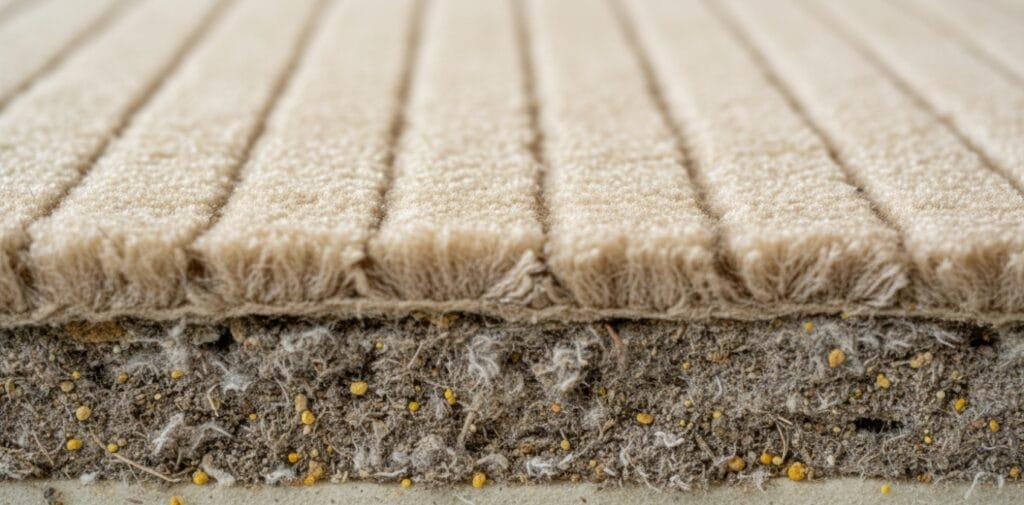
- Pushes particles deeper into fabrics
Your vacuum cleans what it can reach—and ignores what it can’t.
What Household Dust Is Really Made Of in VA Homes
Most people think dust is dirt.
In Virginia homes, dust is a complex blend of:
- Pollen from trees, grass, and weeds
- Road dust and tire particles
- Construction debris
- Dead skin cells
- Pet dander
- Fabric fibers
- Cooking residue
- Outdoor pollutants
Many of these particles are smaller than a grain of sand.
Some are so light they float for hours.
What Vacuums Are Designed to Do—and What They Aren’t
Household vacuums are designed primarily for visible debris.
They are not designed to:
- Capture ultra-fine allergens consistently
- Prevent dust redistribution
- Clean air return vents
- Address wall, trim, and fabric buildup
This isn’t a defect. It’s a design limitation.
The Hidden Dust Cycle Vacuums Don’t Break
Dust doesn’t disappear after vacuuming. It moves.
Here’s the cycle we observe in VA homes:
- Dust settles on floors and furniture
- Vacuum lifts part of it
- Fine particles escape into the air
- HVAC airflow redistributes dust
- Dust resettles on surfaces
- Home looks dusty again
Vacuuming addresses step one—but not the rest.
Why Some Homes Feel Dustier After Vacuuming
Many homeowners tell us their homes feel dustier after they vacuum.
There’s a reason.
Air Disturbance
Vacuum motors create airflow that lifts fine particles into the air.
Without proper filtration, that dust simply relocates.
Carpet Compression
Vacuuming pushes dust deeper into carpet padding, where it resurfaces over time.
Incomplete Surface Coverage
Floors get attention. Walls, vents, and trim do not.
Dust doesn’t respect boundaries.
HEPA Filters: Helpful but Not Complete
HEPA vacuums are better—but still limited.
They help capture fine particles, but they:
- Don’t stop dust entering the home
- Don’t clean surrounding surfaces
- Don’t remove dust stuck to walls or vents
- Don’t address fabric reservoirs
HEPA is a tool, not a solution.
The Areas Vacuums Rarely Address
Most dust problems in VA homes come from areas vacuums barely touch.
| Area | Dust Impact |
| Air return vents | Major dust collectors |
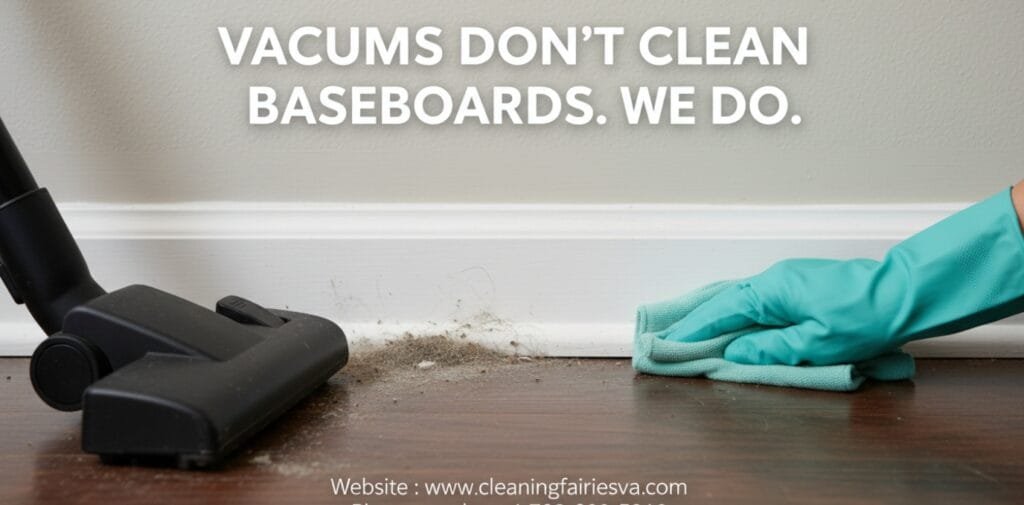
| Baseboards | Dust highways |
| Wall surfaces | Static dust cling |
| Upholstery | Dust storage |
| Curtains | Allergen traps |
| Mattresses | Hidden dust reservoirs |
Ignoring these guarantees dust returns.
Why Virginia HVAC Systems Make Dust Worse
Virginia weather keeps HVAC systems running most of the year.
That means:
- Air is constantly moving
- Dust is constantly circulating
- Dirty vents redistribute particles
If vents and surrounding areas aren’t cleaned, vacuuming floors becomes almost irrelevant.
What Your Vacuum Isn’t Showing You
Vacuums show you what they remove, not what remains.
They don’t show:
- Microscopic allergens left behind
- Dust redistributed into the air
- Particles embedded in fabric
- Residue on vertical surfaces
This creates false confidence.
The Fabric Problem Vacuums Can’t Solve
Carpets, rugs, couches, and curtains are dust magnets.
Every time you:
- Sit down
- Walk across a rug
- Open curtains
Dust is released back into the air.
Vacuuming surfaces alone doesn’t eliminate fabric-stored dust.
Why Dust Comes Back Faster in VA Homes Than You Expect
Virginia’s humidity causes dust to cling, not fall.
This means:
- Dust sticks to walls and furniture
- It resists removal
- It builds in layers
Vacuuming removes the top layer—but leaves the rest intact.
Professional Cleaning vs Vacuum-Only Cleaning
At Cleaning Fairies VA, we don’t rely on vacuums alone.
Here’s the difference:
| Method | Result |
| Vacuum-only | Temporary improvement |
| Professional dust capture | Long-lasting cleanliness |
| Surface cleaning | Cosmetic results |
| Whole-home strategy | Real dust reduction |
Professional cleaning targets dust behavior—not just dust presence.
How Cleaning Fairies VA Handles Dust Differently
1. Dust Capture, Not Dust Movement
We use damp microfiber techniques that trap particles instead of lifting them.
Dry dusting is avoided.
2. Top-to-Bottom Cleaning Strategy
Dust falls.
We clean in a sequence that prevents resettling.
3. Air Return Vent Focus
Air return vents and surrounding walls are treated as priority zones.
This alone reduces recurring dust significantly.
4. Fabric and Upholstery Attention
Dust stored in fabrics is removed, not ignored.
This reduces airborne dust long-term.
The Health Side of Vacuum-Only Cleaning
Vacuum-only cleaning often leaves allergens airborne.
This contributes to:
- Sneezing and congestion
- Itchy eyes
- Headaches
- Poor sleep
- Allergy flare-ups
Especially in children and pets.
Why “Clean Floors” Don’t Mean Clean Air
Clean floors are visible.
Clean air is not.
Air quality improves only when dust sources are removed—not just swept aside.
Common Vacuum Myths in VA Homes
Myth 1: Vacuuming daily keeps dust away
Reality: Without source control, dust returns daily.
Myth 2: New vacuums solve dust problems
Reality: Technique matters more than equipment.
Myth 3: Carpet is the main dust issue
Reality: Airflow and vents matter more.
What Homeowners Can Do Beyond Vacuuming
Until professional cleaning is scheduled, homeowners can:
- Wipe vents and surrounding walls with damp microfiber
- Clean baseboards regularly
- Wash curtains seasonally
- Use entry mats and shoes-off policies
- Change HVAC filters consistently
These help—but don’t replace professional results.
Why VA Homes Need a Whole-Home Dust Strategy
Dust doesn’t live in one place.
It moves through:
- Air
- Fabric
- Foot traffic
- HVAC systems
Only a whole-home approach stops the cycle.
Why Cleaning Fairies VA Focuses on Dust Behavior
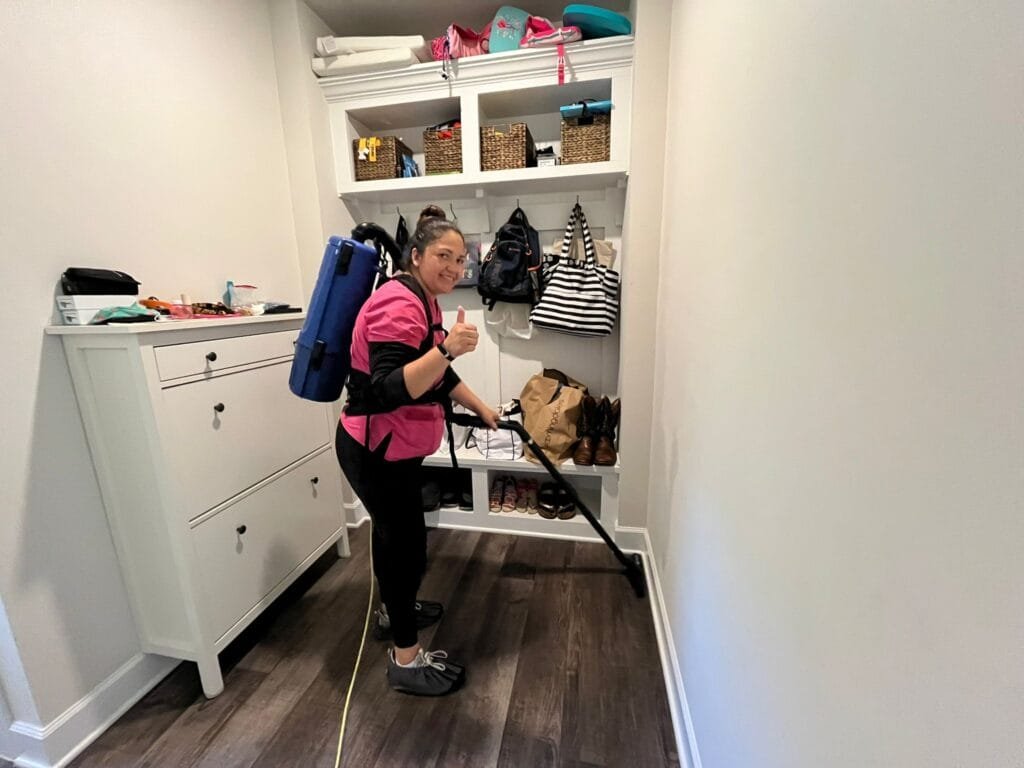
Cleaning Fairies VA doesn’t just remove dust—we study how it behaves in Virginia homes.
Our approach is:
- Environment-aware
- Airflow-focused
- Fabric-conscious
- Long-term oriented
That’s why our clients notice the difference immediately.
The Emotional Cost of Endless Dust
Constant dust creates:
- Frustration
- Cleaning fatigue
- Stress before guests arrive
- Feeling like cleaning never ends
Stopping the cycle restores peace—not just cleanliness.
Final Thoughts
Your vacuum isn’t lying—but it isn’t telling the whole story either.
In Virginia homes, dust is smarter, stickier, and more persistent than most people realize. Vacuuming alone treats symptoms, not causes.
Real cleanliness happens when dust is captured, airflow is controlled, and hidden reservoirs are addressed.
That’s where Cleaning Fairies VA makes the difference.
FAQs
Because fine dust is being redistributed from vents, fabrics, and airflow.
They help, but they don’t solve hidden dust sources.
Yes, especially without proper filtration and technique.
Most benefit from bi-weekly or monthly professional cleaning.
Whole-home strategy, dust capture methods, airflow awareness, and fabric treatment.