Even the most diligent homeowners often face a frustrating problem: your home never feels truly clean, even after hours of effort. Surfaces may look tidy for a short period, but dust seems to return almost immediately. Floors, counters, and even furniture feel messy again the next day.
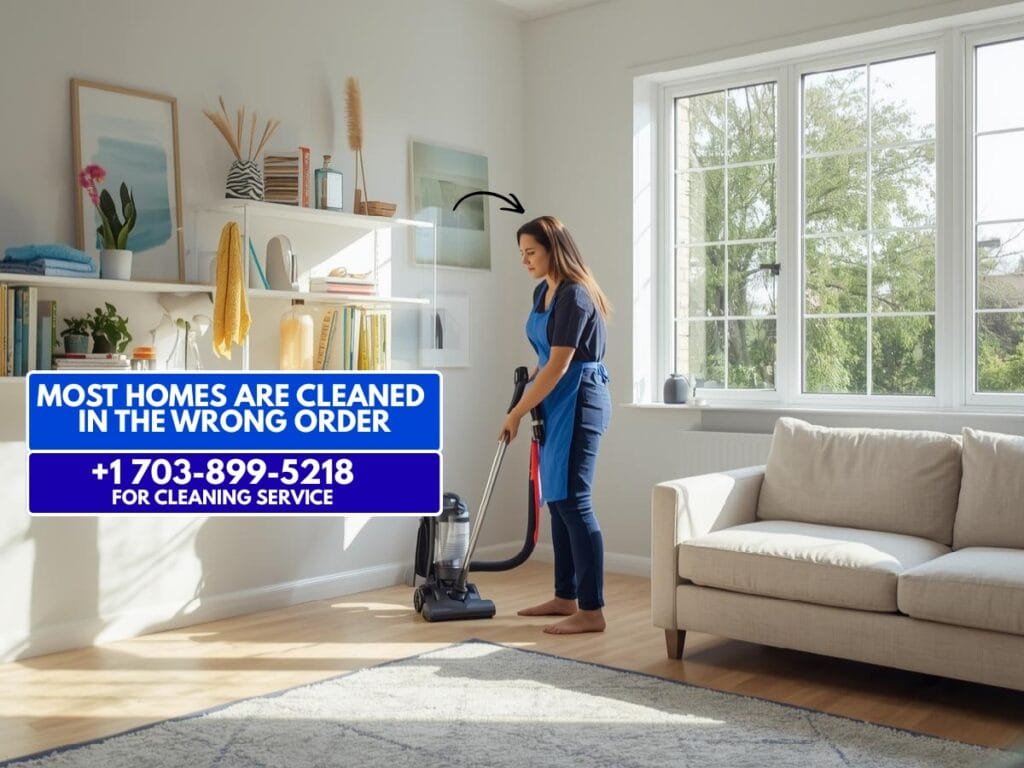
The root cause isn’t effort, time, or products—it’s the order in which cleaning is done.
At Cleaning Fairies VA, we see this all the time. Many homes, even well-kept ones, follow a cleaning routine that unintentionally undoes the work just completed. Dust resettles, residue spreads, and repetitive cleaning feels exhausting.
This guide explains why cleaning order matters, common mistakes homeowners make, and how professionals follow a system to keep homes cleaner, longer.
Why Cleaning Order Matters
Cleaning isn’t just about removing dirt. It’s about controlling movement. Dust, dirt, and residue travel through the home via gravity, airflow, and contact. When cleaning steps are out of sequence:
- Dust falls on freshly cleaned surfaces.
- Floors get dirty immediately after vacuuming.
- Airborne particles settle quickly, undoing surface work.
- Hidden dirt spreads from neglected zones.
A poorly sequenced routine leads to re-cleaning the same areas repeatedly, frustration, and wasted time. Professionals avoid this by containing contaminants first, then removing them efficiently.
The Most Common Mistakes in Cleaning Order
Most DIY routines prioritize convenience over strategy. Typical errors include:
- Vacuuming before dusting – Dust falls from shelves and fans, landing back on the floor.
- Cleaning floors before vents and ceiling fans – The air circulates dirt after floors are cleaned.
- Wiping surfaces before decluttering – Objects move and redistribute dust, leaving surfaces streaked.
- Using sprays too early – Residues attract dust if applied before dusting.
- Skipping hidden or high-up areas – Baseboards, light fixtures, and vents are often neglected until the end—or forever.
These habits create a cycle of frustration where cleaning never seems complete.
How Professionals Clean Differently
Professional cleaners follow a systematic approach that maximizes efficiency and cleanliness:
- Top-to-bottom: Dust starts high and falls naturally to the floor.
- Dry-to-wet: Remove dry dust before introducing liquids.
- Inside-to-outside: Contaminants move outwards, not back into cleaned spaces.
At Cleaning Fairies VA, every home is cleaned using a method that reduces dust redistribution and extends the life of a clean environment.
The Correct Cleaning Order (Professional Standard)
1. Start with Air and Elevated Areas
Dust begins above, not on the floor.
Areas to focus on first:
- Ceiling fans
- Light fixtures
- Air vents and returns
- High shelves
- Wall corners
Cleaning these areas first ensures that falling dust doesn’t land on freshly cleaned surfaces.
2. Declutter Before Cleaning Surfaces
Objects on surfaces attract and spread dust. Professionals:
- Remove items from tables, counters, and shelves
- Group essentials neatly
- Maintain clear zones for cleaning
Decluttering before wiping makes the cleaning process faster and more effective.
3. Dry Dusting Before Wet Cleaning
Always remove dry dust first. Microfiber cloths, dusters, and vacuum attachments eliminate loose particles.
Skipping this step leads to residue buildup and streaking when wet cleaners are used.
4. Surface Cleaning with Residue Control
DIY products often leave sticky films that attract dust. Professionals use:
- Controlled amounts of residue-free solutions
- Proper dwell time for cleaners
- Clean cloth rotation to prevent cross-contamination
This approach ensures long-lasting surfaces that repel dust rather than attract it.
5. Floors are Always Last
Floors collect everything that falls during earlier cleaning steps. Professional floor care happens after all surfaces are done, including under furniture. This guarantees that freshly cleaned floors stay clean longer.
Why DIY Cleaning Fails, Even When Frequent
DIY cleaning is reactive, not strategic:
- Cleaning what looks dirty
- Skipping non-visible areas
- Rushing through steps
- Overusing multipurpose products
The result: a home that appears clean superficially, but dust, allergens, and residues remain—continuously cycling back.
Hidden Areas: The Real Difference Maker
Many homeowners overlook zones that impact overall cleanliness:
- Baseboards and trim
- Window tracks and sills
- Under furniture and beds
- Door frames and handles
- Switch plates
- Air vents and returns
Professional cleaners target these areas, reducing the source of dust recirculation.
How Incorrect Cleaning Order Increases Stress
When cleaning doesn’t last, it has a psychological cost:
- Motivation drops after repeated effort
- Stress levels rise from “never-ending” chores
- Mental fatigue increases
- Homes feel chaotic despite frequent cleaning
Correct order delivers faster results, longer-lasting cleanliness, and a calmer environment.
Professional Cleaning as the Reset Point
Daily routines maintain what already exists. Professional cleaning establishes a baseline:
- Removes embedded dust and allergens
- Eliminates residue buildup
- Improves airflow and indoor air quality
- Resets the home’s cleanliness cycle
Once professionals set the stage, daily maintenance is more effective and less stressful.
Who Benefits Most from Correct Cleaning Order?
- Busy families and households
- Homes with children or pets
- Allergy-sensitive individuals
- Remote workers and home offices
- High-foot-traffic homes
Correct sequencing improves both cleanliness and quality of life.
Final Thoughts
Most homes aren’t dirty—they’re cleaned in the wrong order.
Changing the cleaning sequence can save time, reduce frustration, and maintain a calmer, healthier home. At Cleaning Fairies VA, we use proven systems that work with your home, not against it.
If your cleaning never seems to last, start with the order, not the effort.
FAQs
Dust from vents, fans, and hidden areas may not have been addressed first. Correct sequencing removes contaminants at the source.
Yes. Dust falls onto freshly vacuumed floors, undoing your work.
Absolutely. Strategic cleaning removes airborne allergens instead of redistributing them.
Bi-weekly or monthly, depending on lifestyle, foot traffic, and household composition.
No. Daily routines maintain order but cannot remove deep buildup or hidden residues.