For many Chantilly VA homeowners, it can feel like no matter how often they clean, dust, dirt, and grime keep returning. Floors get dusty, counters look streaked, and indoor air seems less fresh than it should.
The culprit? It’s not neglect—it’s your environment. Traffic and construction around Chantilly VA homes are silent contributors to this recurring problem. At Cleaning Fairies VA, we regularly see homes where no amount of surface cleaning seems sufficient—and it almost always links back to these two factors.
Understanding how traffic and construction impact your home is the first step to a cleaner, healthier living space. In this article, we’ll explore the reasons, the science behind it, and the professional solutions that make a real difference.
The Unique Challenges of Chantilly VA Homes
Chantilly is a thriving Northern Virginia community known for its busy highways, growing commercial zones, and fast-developing neighborhoods. These factors combine to create conditions where dirt and dust enter homes far more aggressively than in less-developed areas.
Key Local Factors:
- Heavy Traffic Roads: Route 50, Route 28, and nearby interstate highways bring fine dust, tire particles, and other debris into neighborhoods.
- Construction Projects: Residential expansions and commercial developments stir up dust and small debris that can travel far.
- Seasonal Pollen and Plant Debris: Chantilly’s green spaces and tree-lined streets contribute pollen and tiny organic particles that settle indoors.
- Older Homes with Gaps and Leaks: Even modern homes can allow dust from streets and construction sites to infiltrate.
- Family Homes with Pets and Kids: Every footstep and pet movement lifts more dust into the air.
The combination of these factors creates a perfect storm: dust enters faster than it can be removed.
How Traffic Contributes to Dirt Inside Your Home
Many homeowners assume dust comes only from inside. But outdoor pollution plays a significant role.
1. Tire Dust and Road Particles
Vehicles generate fine particles that include:
- Rubber from tires
- Tiny metal fragments from brakes
- Road dust and sand
These particles are microscopic but heavy enough to settle on floors, countertops, and even furniture.
2. Airborne Dust From Vehicles
Fast-moving cars create air currents that lift dust from streets into driveways and nearby lawns. Windows, doors, and even small gaps allow these particles to enter homes.
3. Pollutants from Idling Traffic
Particulate matter from exhaust can coagulate with dust and settle inside homes, making the environment feel dirtier despite regular cleaning.
Construction Dust: A Hidden Enemy
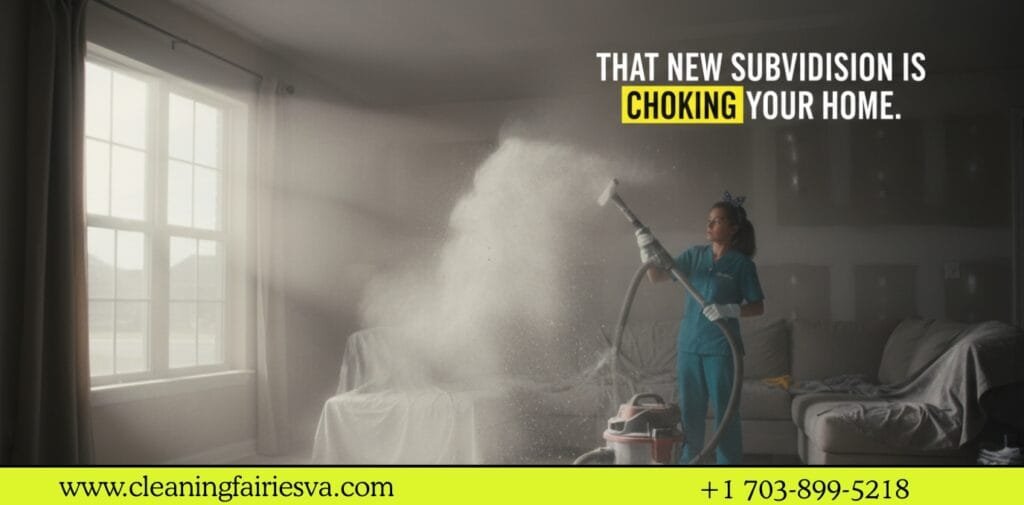
Whether it’s a new subdivision or a commercial development near your neighborhood, construction sites generate massive amounts of fine, airborne dust.
What Construction Dust Contains
- Drywall particles
- Cement and concrete dust
- Wood fibers
- Paint residue
- Adhesives and chemicals
This dust is smaller than typical household dust, making it much harder to remove.
How Construction Dust Enters Homes

- Open windows and doors
- HVAC systems pulling in outside air
- Foot traffic carrying dust inside on shoes or clothes
- Cracks and gaps around windows or doors
Unlike everyday dust, construction dust can remain suspended in the air for days, settling slowly on every surface.
The Science Behind Dust Accumulation
Dust isn’t just cosmetic—it behaves according to physical principles. Understanding how it moves explains why Chantilly homes often feel perpetually dirty.
Dust Movement Factors
- Airflow from HVAC systems – Dust is pulled into vents and redistributed throughout the house.
- Human and pet movement – Each step lifts settled dust back into the air.
- Static electricity – Dust particles cling to electronics, fabrics, and walls.
- Gravity – Heavier particles settle on floors and horizontal surfaces; lighter particles remain airborne.
The Dust Cycle
| Source | Entry Method | Settling Area |
| Traffic | Windows, doors, small gaps | Floors, baseboards, furniture |
| Construction | Air, foot traffic | Shelves, counters, vents |
| HVAC | Internal air circulation | Air return vents, ceiling fans |
| Residents | Footsteps, clothing, pets | Floors, rugs, upholstery |
This table illustrates how dust continuously circulates, undermining surface cleaning if ignored.
Why Regular Cleaning Alone Doesn’t Solve the Problem
Many homeowners clean frequently but still see rapid dust return. The problem is often surface-focused cleaning. Vacuuming, wiping, and sweeping are necessary but insufficient to address the source.
Common Cleaning Mistakes
- Dry dusting, which spreads dust rather than trapping it
- Neglecting air return vents and fan blades
- Ignoring fabric surfaces like curtains, rugs, and upholstery
- Cleaning only visible surfaces without considering airflow patterns
Without addressing these areas, dust continues to enter, circulate, and settle, creating a sense that cleaning is endless.
How Professional Cleaning Breaks the Dust Cycle
At Cleaning Fairies VA, we approach cleaning differently. Instead of chasing dust, we stop it at its source and break the circulation cycle.
Step 1: Air Quality Assessment
We evaluate your HVAC system, vents, and air patterns to identify where dust enters and recirculates.
Step 2: Targeted Dust Removal
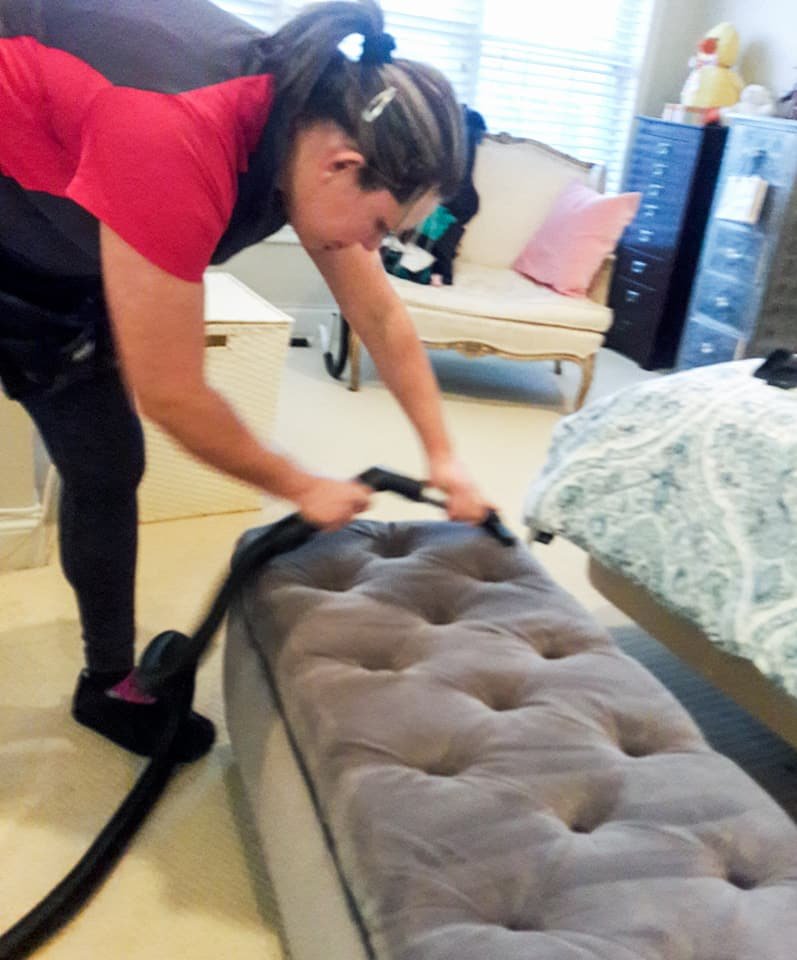
- HEPA-filter vacuums for floors, upholstery, and vents
- Microfiber cloths for walls, trim, and furniture
- Damp dusting to capture particles rather than move them
Step 3: Strategic Cleaning Sequence
Cleaning is done top to bottom, ensuring dust falls onto surfaces that will be cleaned last, rather than re-contaminating cleaned areas.
Step 4: Fabric and High-Risk Area Attention
Dust tends to accumulate in rugs, curtains, and upholstered furniture. We treat these as priority zones to reduce airborne dust significantly.
Long-Term Benefits of Professional Cleaning in Chantilly VA
- Slower Dust Accumulation – Homes remain cleaner longer.
- Improved Indoor Air Quality – Reduced allergens and respiratory irritants.
- Enhanced Health – Families experience fewer allergy flare-ups.
- Surface Preservation – Furniture, floors, and fixtures last longer.
- Peace of Mind – Homeowners feel genuinely clean, not just superficially tidy.
DIY Tips for Dust Prevention Between Professional Visits
While professional cleaning is critical, homeowners can take steps to reduce dust:
- Use high-quality doormats to trap outdoor dirt
- Implement a shoes-off policy
- Clean air return vents with damp cloths
- Use HEPA-filter vacuums regularly
- Reduce clutter to minimize dust-catching surfaces
Even with these steps, homes near heavy traffic and construction still require professional intervention for long-term results.
Case Study: Chantilly VA Home
A family living near Route 50 noticed dust returning daily despite weekly cleaning. Cleaning Fairies VA conducted a full assessment and identified:
- Heavy dust accumulation in air return vents
- Dust on window sills from nearby road traffic
- Fabric surfaces as major dust reservoirs
After targeted cleaning:
- Dust buildup decreased by over 60%
- Allergic reactions in children were reduced
- Surfaces stayed visibly clean for weeks longer
This demonstrates the impact of addressing dust at its source.
Why Cleaning Fairies VA Stands Out
We understand Chantilly VA homes, local environmental factors, and traffic/construction challenges. Our approach is:
- Tailored to your home’s airflow and construction type
- Focused on long-term dust reduction
- Health-conscious and family-safe
- Comprehensive and detail-oriented
Our clients consistently report homes that stay cleaner, fresher, and healthier than before.
Final Thoughts
Traffic and construction in Chantilly VA are more than nuisances—they are ongoing sources of dirt and dust that impact your home.
Regular cleaning is essential, but without addressing airflow patterns, air return vents, and fabric surfaces, dust keeps circulating.
Professional cleaning from Cleaning Fairies VA interrupts this cycle, providing homes that truly feel clean, inside and out.
FAQs
Through open windows, doors, and small gaps, as well as settling on driveways and lawns that people track inside.
Yes, fine dust from construction sites can remain airborne for days, increasing allergens and respiratory irritants.
Homes in high-traffic areas benefit from bi-weekly to monthly professional cleaning, depending on family and pet activity.
Yes, HEPA vacuums capture fine particles that ordinary vacuums often redistribute, especially important for dust from traffic and construction.
Yes, through shoes-off policies, regular microfiber cleaning, and maintaining clean HVAC filters—but professional cleaning is needed to eliminate hidden sources.