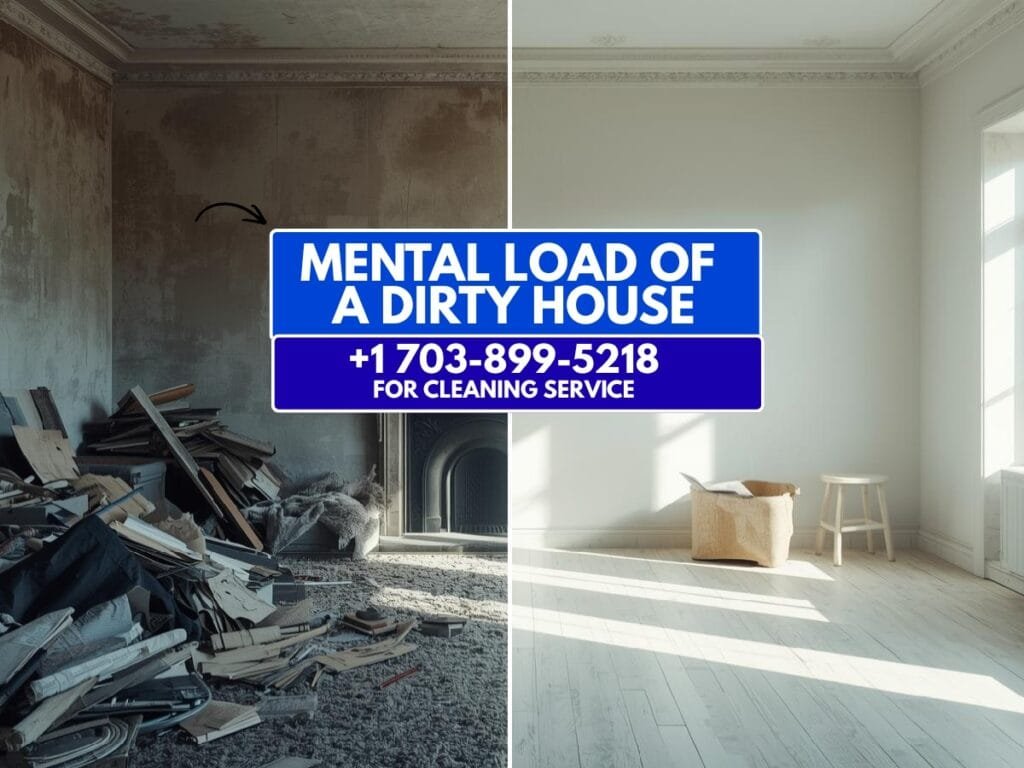
A dirty house doesn’t just sit quietly in the background.
It speaks.
It whispers reminders when you’re trying to relax.
It interrupts your thoughts when you’re working.
It weighs on you even when you’re not consciously thinking about it.
This is the mental load of a dirty house—and it’s far heavier than most people realize.
What Is the “Mental Load” of a Home?
Mental load is the invisible effort required to manage, remember, and worry about tasks that are never fully done. In a home, this includes:
- Noticing dust on shelves
- Remembering which rooms still need cleaning
- Feeling guilty about clutter
- Stressing about guests dropping by
- Constantly postponing chores
Unlike physical mess, mental load doesn’t stay in one place. It follows you from room to room—and even outside your home.
Why a Dirty House Feels So Mentally Exhausting
You don’t need chaos for stress to exist. Even mild mess creates a constant background noise in the brain.
A dirty home creates:
- Visual overstimulation
- Decision fatigue
- Emotional guilt
- A sense of unfinished business
Every surface that isn’t clean becomes a silent to-do list item.
Your brain doesn’t relax because it’s always monitoring.
The Brain’s Reaction to Clutter and Dirt
Our brains are wired to scan environments for safety and order. When a space feels unclean, the brain stays alert.
That means:
- Elevated stress hormones
- Reduced ability to focus
- Lower emotional regulation
- Increased irritability
A messy environment doesn’t allow the mind to rest—it keeps it working overtime.
The Difference Between “Messy” and “Mentally Heavy”
Not all messes are equal.
A toy on the floor might not bother you.
Dust layering on baseboards might not scream for attention.
But together, they create a feeling that something is off.
That heaviness often shows up as:
- Low motivation
- Overwhelm
- Mental fog
- Avoidance
You may not think, “My house is stressing me out.”
You just feel tired.
Why DIY Cleaning Often Doesn’t Remove the Mental Load
Many people clean regularly—yet still feel overwhelmed.
Why?
Because most DIY cleaning focuses on appearance, not impact.
Common DIY patterns:
- Cleaning only visible surfaces
- Skipping hidden areas
- Using scented products that mask problems
- Rushing due to lack of time
This leads to a frustrating cycle:
Clean → Looks better → Quickly feels dirty again
The mental load never leaves.
The Psychological Relief of a Truly Clean Home
A professionally cleaned home feels different—not because it’s perfect, but because it’s complete.
When deep, neglected areas are addressed, the brain registers closure.
That creates:
- Mental quiet
- Emotional relief
- Increased focus
- A sense of control
This is why people often say, “I didn’t realize how stressed I was until it was clean.”
The Hidden Areas That Carry Mental Weight
Some areas affect mental load more than others—even though they’re rarely noticed directly.
✦ Air vents and returns
✦ Baseboards and trim
✦ Window tracks and sills
✦ Under furniture
✦ Ceiling fans and light fixtures
When these areas are dirty, dust continuously re-enters the space, undoing surface cleaning and keeping stress cycles alive.
At Cleaning Fairies VA, these areas are prioritized because they influence how long cleanliness—and calm—lasts.
Why Smells Increase Stress More Than You Think
Scent is directly tied to memory and emotion.
Artificial fragrances may smell “clean,” but they often trigger subconscious discomfort because they mask rather than resolve odors.
A professionally cleaned home smells neutral—not perfumed.
That neutrality signals:
- Safety
- Freshness
- Balance
Your nervous system responds accordingly.
The Guilt Loop: “I Should Clean”
One of the heaviest mental burdens of a dirty house is guilt.
You might think:
- “I should clean before relaxing.”
- “I can’t invite people over.”
- “Why can’t I keep up like others?”
This guilt consumes energy—even when you do nothing.
Professional cleaning interrupts this loop by removing the responsibility pressure.
Time Scarcity Makes Mental Load Worse
Most households aren’t lazy—they’re busy.
Between work, family, and personal obligations, cleaning becomes another demand competing for limited energy.
DIY cleaning requires:
- Planning
- Physical effort
- Mental focus
- Recovery time
Even after cleaning, exhaustion remains.
Professional cleaning gives time back—without leaving mental residue behind.
Why Clean Homes Improve Decision-Making
Studies show cluttered environments increase indecision and fatigue.
A clean home:
- Reduces sensory input
- Improves concentration
- Supports clearer thinking
When your environment is settled, your mind follows.
This is why people often feel more productive, calmer, and emotionally balanced after professional cleaning.
The Emotional Reset Effect
Professional cleaning creates a psychological reset.
It signals:
- A fresh start
- A regained sense of control
- A break from overwhelm
Many clients of Cleaning Fairies VA describe the experience not as cleaning—but as relief.
Why Mental Load Returns When Cleaning Isn’t Done Properly
If cleaning leaves behind residue, dust-attracting films, or missed areas, mental load returns quickly.
Professional methods:
- Use residue-free solutions
- Remove buildup instead of spreading it
- Clean systematically—not randomly
This extends the feeling of calm far beyond the cleaning day.
Clean Homes Support Emotional Regulation
A clean environment reduces emotional friction.
That means:
- Fewer irritability spikes
- Better patience
- Improved sleep quality
- Easier relaxation
When your space supports you, emotional resilience increases naturally.
The Confidence of a Clean Home
Mental load is closely tied to confidence.
When your home is clean:
- You’re comfortable with unplanned guests
- You relax without guilt
- You feel in control of your environment
This confidence isn’t about impressing others—it’s about peace within yourself.
Professional Cleaning as Mental Self-Care
Cleaning isn’t just a chore—it’s environmental self-care.
Professional cleaning:
- Removes stress triggers
- Reduces ongoing mental effort
- Creates lasting calm
At Cleaning Fairies VA, the goal isn’t just a clean home—it’s a lighter mind.
Why Mental Load Is Lighter After Professional Cleaning
Because the brain trusts the environment.
When cleaning is thorough, consistent, and residue-free, your mind stops scanning for problems.
That’s when true rest begins.
Cleaning Isn’t About Perfection—It’s About Relief
A perfectly styled home isn’t necessary.
A mentally calm home is.
Professional cleaning removes the invisible weight you’ve been carrying—often without realizing it.
Final Thoughts
The mental load of a dirty house is real.
It’s cumulative.
And it’s exhausting.
Cleaning fixes it not by making things look good—but by restoring balance, control, and peace.
When your home is clean at its core, your mind finally has space to breathe.
That’s the difference professional cleaning makes.
FAQs
Yes. Clutter and dirt create visual and mental overload, keeping the brain in a constant state of alertness and increasing stress hormones.
Surface cleaning often misses hidden areas that continue to release dust and disrupt mental calm. Incomplete cleaning leads to faster stress return.
Professional cleaning removes dirt at its source, reduces sensory clutter, and eliminates the need to mentally track unfinished cleaning tasks.
Many people find professional cleaning improves focus, mood, and emotional balance by creating an environment that supports relaxation.
When done properly, professional cleaning creates longer-lasting calm because it prevents dust and residue from returning quickly.