As the crisp air of fall turns into the biting chill of winter, many homeowners focus on cozy blankets, hot drinks, and festive decorations — but one critical home maintenance task is often overlooked: winterizing your AC and heating systems. Proper preparation can save you thousands in repair costs, improve energy efficiency, and ensure your home stays comfortable throughout the colder months.
At Cleaning Fairies VA, we work with homeowners in Northern Virginia to help maintain HVAC systems through seasonal cleaning and preventive care. This guide walks you through step-by-step tips, common pitfalls, and expert advice for keeping your AC and heating systems in top shape.
Why Winterizing Your HVAC System Matters
Heating, ventilation, and air conditioning systems work harder during seasonal transitions. Failing to properly maintain them can result in:
- Energy inefficiency: Dirty components make systems work harder, raising energy bills.
- Costly repairs: Neglecting cleaning can lead to breakdowns that require expensive repairs.
- Shortened system lifespan: Accumulated dust and debris strain system components.
- Poor indoor air quality: Dust, mold, and allergens may circulate throughout your home.
Winterizing ensures your system runs efficiently, reduces repair needs, and keeps your indoor air healthy.
Clean or Replace Air Filters Regularly
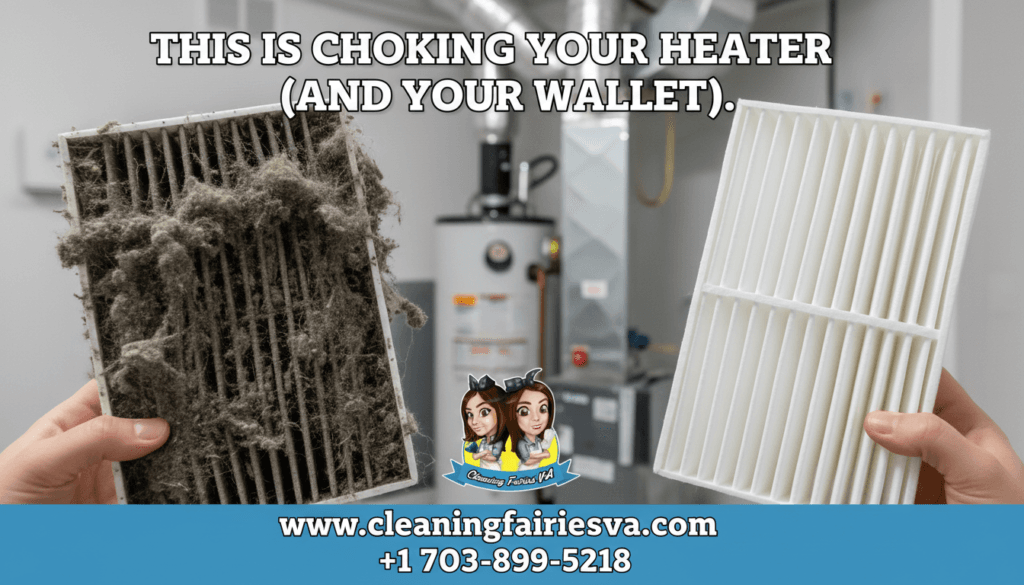
Air filters are the first line of defense in your HVAC system. They trap dust, pollen, and debris that can otherwise clog your system and reduce efficiency.
Tips from Cleaning Fairies VA:
- Check monthly: Inspect filters at least once a month, especially during peak usage.
- Replace if needed: Disposable filters should be replaced every 30–90 days, depending on the type and usage.
- Consider high-efficiency filters: HEPA or pleated filters capture more particles and improve air quality.
Why it matters: A clogged filter forces the system to work harder, increasing wear and energy costs. Clean filters prevent these issues and contribute to a healthier, more comfortable home.
Clean Air Ducts and Vents
Dust and debris accumulate in air ducts and vents over time. This can lead to:
- Uneven heating
- Increased allergens
- Reduced airflow
Winterizing Tips:
- Vacuum vent openings: Remove dust from grilles and registers.
- Professional duct cleaning: Consider hiring professionals every 2–3 years.
- Seal leaks: Inspect ducts for leaks or gaps, which can lead to energy loss.
Expert tip: Cleaning ducts before winter ensures your heated air is distributed efficiently, reducing system strain.
Inspect and Clean Your Outdoor AC Unit
Even though your AC won’t be used as heavily in winter, the outdoor unit should be prepped for the season.
- Remove debris: Clear leaves, dirt, and branches from around the unit.
- Check for damage: Inspect fins and coils for bent or damaged areas.
- Cover with care: If you use a cover, ensure it allows ventilation to prevent moisture buildup.
Pro tip from Cleaning Fairies VA: Avoid tightly wrapping the unit in plastic, as this can trap moisture and promote rust or mold.
Clean Your Furnace or Heater
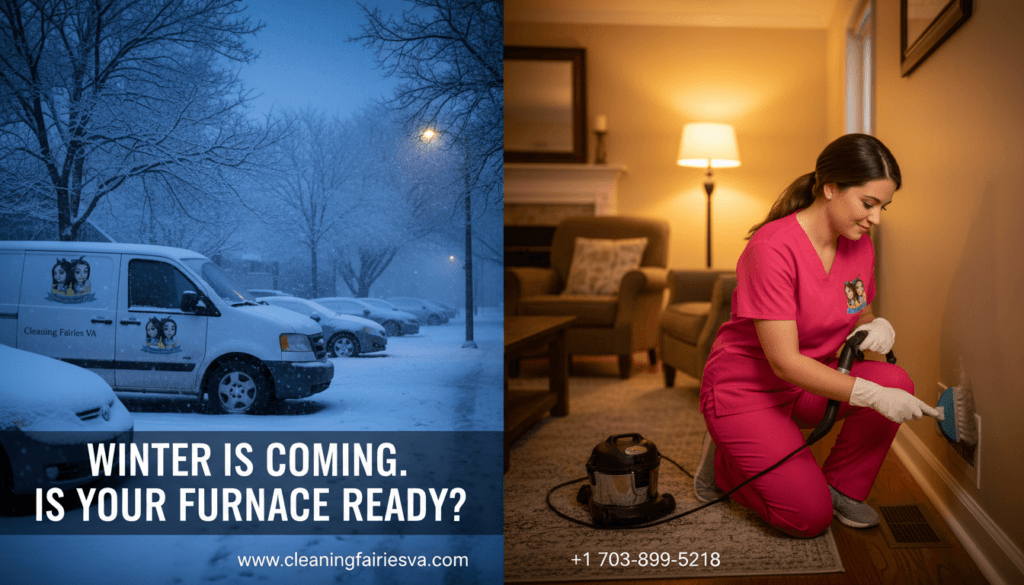
Your furnace will work overtime during winter, so it’s essential to inspect and clean key components:
- Blower assembly: Dust and dirt on the blower wheel reduce efficiency.
- Burner flames: Ensure burners are clean and flames are blue (yellow or orange flames indicate issues).
- Heat exchanger: Inspect for cracks or corrosion to prevent leaks of dangerous gases.
Maintenance tip: If you’re uncomfortable with furnace cleaning, hire a professional — a small preventive cost can save thousands in repairs.
nspect Thermostat Settings and Functionality
A properly functioning thermostat ensures your home stays comfortable while conserving energy.
- Programmable thermostats: Set a schedule to reduce energy usage while you’re away.
- Test responsiveness: Verify the thermostat triggers heating at the set temperature.
- Calibrate if needed: Some older thermostats may need recalibration to reflect accurate readings.
Pro tip: Smart thermostats can provide alerts for unusual system behavior, helping prevent breakdowns during winter.
Clean Condensate Drains
Even heating systems produce condensation, which can accumulate and cause clogs or mold growth.
Steps to maintain drains:
- Pour a mixture of bleach and water down the drain to remove mold and algae.
- Check that water flows freely from the condensate pan.
- Clean the drain pan to prevent overflow issues.
Why it matters: A clogged drain can cause water damage and reduce system efficiency.
Check System Insulation
Pipes, ducts, and refrigerant lines should be properly insulated to prevent energy loss and system strain:
- Seal leaks in ductwork: Use foil tape or mastic sealant.
- Insulate exposed pipes: Especially those in attics, basements, or crawl spaces.
- Check outdoor refrigerant lines: Wrap them with foam insulation sleeves.
Proper insulation ensures maximum energy efficiency and consistent home comfort.
Schedule Professional Maintenance
Even with diligent cleaning, annual professional inspection is critical:
- Identify minor issues early: Professionals can detect worn belts, failing motors, or gas leaks.
- Ensure safety: Proper inspection prevents dangerous situations like carbon monoxide leaks.
- Maximize system lifespan: Routine maintenance reduces wear and tear, delaying costly replacements.
Cleaning Fairies VA tip: Combine DIY cleaning with professional servicing for the most effective winterization strategy.
Energy-Saving Tips While Winterizing
Beyond cleaning, small adjustments can improve comfort and reduce costs:
| Tip | Benefit |
| Close vents in unused rooms | Directs warm air to frequently used areas |
| Use ceiling fans on low, reverse mode | Helps circulate warm air evenly |
| Seal windows and doors | Prevents cold drafts from undermining your heating system |
| Install weather stripping | Reduces energy loss by up to 20% |
Extra tip: Regularly monitor your energy bills — a sudden spike may indicate HVAC inefficiency or maintenance needs.
Benefits of Winterizing Your HVAC System
- Reduced emergency repairs – proactive cleaning prevents breakdowns.
- Lower energy bills – clean systems operate more efficiently.
- Improved air quality – dust, mold, and allergens are minimized.
- Extended lifespan of HVAC equipment – less strain means fewer replacements.
- Peace of mind – you’ll enjoy a warm, comfortable, and safe home all winter.
Final Thoughts
Winterizing your AC and heating systems is more than just a seasonal task — it’s a smart investment in comfort, efficiency, and safety. By following these cleaning tips, inspecting key components, and scheduling professional maintenance, you can avoid costly repairs and enjoy a warm, stress-free home all winter long.
Cleaning Fairies VA is here to guide Northern Virginia homeowners through effective seasonal cleaning and preventive care, ensuring every home stays cozy, clean, and well-maintained.
FAQs
Inspect filters monthly and clean components seasonally. Professional maintenance should be scheduled at least once a year, ideally before winter.
Many cleaning tasks, like changing filters, vacuuming vents, and clearing debris, can be done yourself. However, furnace and professional duct inspections should be handled by trained technicians.
Air filters are critical because they impact airflow, system efficiency, and indoor air quality. Dirty filters are the leading cause of HVAC strain.
Cleaning and inspecting your system ensures debris, clogs, and minor damage don’t escalate into major issues. Preventive maintenance reduces wear and tear, saving money in the long run.
We provide professional cleaning guidance, seasonal maintenance tips, and can coordinate with certified HVAC technicians to ensure your system is ready for winter — keeping your home safe, efficient, and comfortable.